
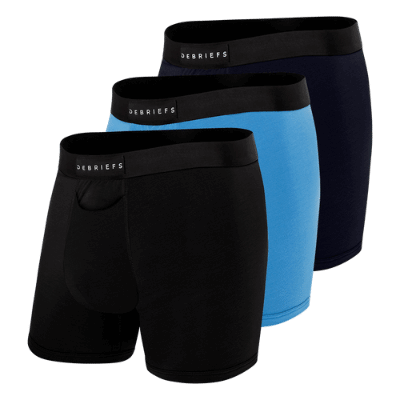
Underwear goes on first and comes off last. In between, it's doing one of two things. Either it's doing nothing, which is what good underwear does. Or it's making your day measurably worse. Not loudly. Just enough to follow you through the next sixteen hours.
The choice happens in about four seconds. Morning routine, dark bedroom, front of the drawer. Then you're locked in until you get home. No mid-day exit, no swap at the desk, no taking it off when the room gets warm. The decision travels through every meeting, every commute, every hour on your feet, until you walk through the front door.
Most men have a version of this moment they'd rather not examine too closely. The comfortable pair at the front. The mediocre ones behind it. The pair at the very back that's technically still wearable. Each morning, a small calculus.
When the pair is right, you never think about it again. When it isn't, the day has a texture to it. Not dramatic. Just there.
What Bad Underwear Does to a Day
The complaints I hear most aren't catastrophic. They're specific and recurring.
Ride-up that starts mid-morning and compounds as the day goes on. Waistband fine at 7am, digging in by noon. Bunching at the inner thigh. The adjustment reflex, so automatic that most men don't register they're doing it until it's the sixth time and it's not even lunch.
That particular damp feeling after the commute that never quite resolves. The moment when you realise you've been thinking about your underwear since 10am.
"I was so uncomfortable all day, kept readjusting, wondering why the hell I had to readjust every few minutes." That's one person describing a single bad day. Men are living that on repeat without connecting it to what they grabbed from the drawer at 7am.
"I'm on my feet like 10 hours a day for work and my underwear is always riding up or bunching." And then there's "by lunchtime I look like I'm out here accidentally rocking a thong." The descriptions are funny. The underlying problem is not.
What's happening is that the underwear is competing for attention. Not loudly, but persistently. Every adjustment, every friction check, every moment of damp awareness is a small draw. Individual interruptions are trivial. The accumulation across sixteen hours is not.
The Attention Tax
Physical discomfort doesn't just hurt. It pulls focus.
Not dramatically, not the way a headache does, but in small, consistent pulls. Something isn't right. The brain checks. You can't override it by focusing harder, because the check-in happens below the level of conscious decision. The underwear that's bunching or damp or riding up sends a low-level signal every few minutes.
This is why bad underwear doesn't feel like a crisis. Each interruption is minor. The waistband dig registers for a moment. The ride-up only matters until you fix it. But garment comfort interacts with physiological and psychological state in ways that are real even when they're subtle.
This is also why the problem persists. Each discomfort is small enough to absorb in the moment. Not small enough to ignore entirely, but small enough not to trigger the effort of doing something about it. So it runs. Day after day, pair after pair, until the habit of tolerating mediocre underwear becomes invisible.
The men who describe good underwear as "I don't even know I'm wearing them" aren't reporting a transformation. They're reporting the removal of something that was quietly taking up space.
Why Ride-Up Happens
Ride-up is architecture, not bad luck.
The inseam is the first variable. When it's too short for your thighs, the leg band sits inside the friction zone rather than below it. Every movement, sitting, standing, climbing stairs, pushes the fabric upward. There's no natural resting position. Once the hem has migrated, the elastane tension isn't strong enough to pull it back against ongoing movement pressure.
The elastane is the second variable. Leg hems rely on elastic tension to maintain position through hundreds of movement cycles in a day. In cheaper garments, or any garment that's had enough washes, that tension degrades. The hem creeps. Nothing dramatic. Just slow drift, every day, in one direction.
The fix is structural. Longer inseam puts the band below the friction zone. Quality elastane holds position through a full day's movement. Neither of these is a special feature. They're what the garment needs to stay where you put it.
Why Chafing Happens
Friction causes chafing, and the groin and inner thigh are among the most friction-prone areas on the body. Skin contacts skin. Skin contacts fabric. Both surfaces move constantly. Then moisture enters the equation.
When skin stays damp, it softens. Softened skin tolerates less friction before it starts to damage. So friction that was manageable at 8am becomes painful by mid-afternoon, after hours of accumulated heat and sweat. Cotton holds that moisture against the skin and keeps it in that soft, vulnerable state for as long as the garment stays on.
MicroModal fibres absorb and release moisture rather than holding it. The skin microclimate stays drier. Drier skin handles friction better. Not sweat-proof. Just better at managing what the body produces throughout a normal day.
Tags and seams belong in this conversation. A tag is a stiff, concentrated friction point sitting against warm moist skin for the entire day. A raised seam creates a pressure ridge across a contact area that builds friction over hours. These are legitimate chafe contributors, not incidental design choices. Flatlock stitching lies flat against skin. No raised edge, no concentrated point of contact. Over a sixteen-hour day, that distinction matters more than it sounds.
The Moisture Problem
Your body runs at around 37 degrees. Underwear sits closest to that heat source, in a partially enclosed space, from the moment it goes on.
Clothing comfort research identifies skin humidity as a primary physiological comfort parameter.
Above that, the damp sensation crosses from unnoticeable to actively uncomfortable. Cotton underwear crosses that threshold quickly under normal daily conditions and stays above it for most of the day.
This is the physics behind arriving at the office already feeling off. Or the specific misery of a warm afternoon meeting after an active morning. Your body is doing nothing unusual. The fabric is just holding what the body produces rather than moving it away.
The inner thigh and crotch are primary comfort drivers during normal daily movement, precisely because those zones see pressure, friction, and moisture stacking on each other at once. Getting the fabric right there changes the experience across the whole day.
There's a fuller explanation of why cotton manages moisture differently to modal if you want to go deeper on the material side. The short version is that the fibre structure determines how quickly moisture moves away from the skin, and that difference is felt across a day rather than just on first wear.
The Fit Half
Fabric is one lever. Fit is the other. They interact.
Better fabric in the wrong cut still rides up if the inseam is too short. A longer inseam in moisture-retaining fabric still chafes after eight hours. Both variables need to be right at the same time. Which is why "I tried a more expensive pair once and it still wasn't comfortable" is often a cut problem attributed to a brand problem.
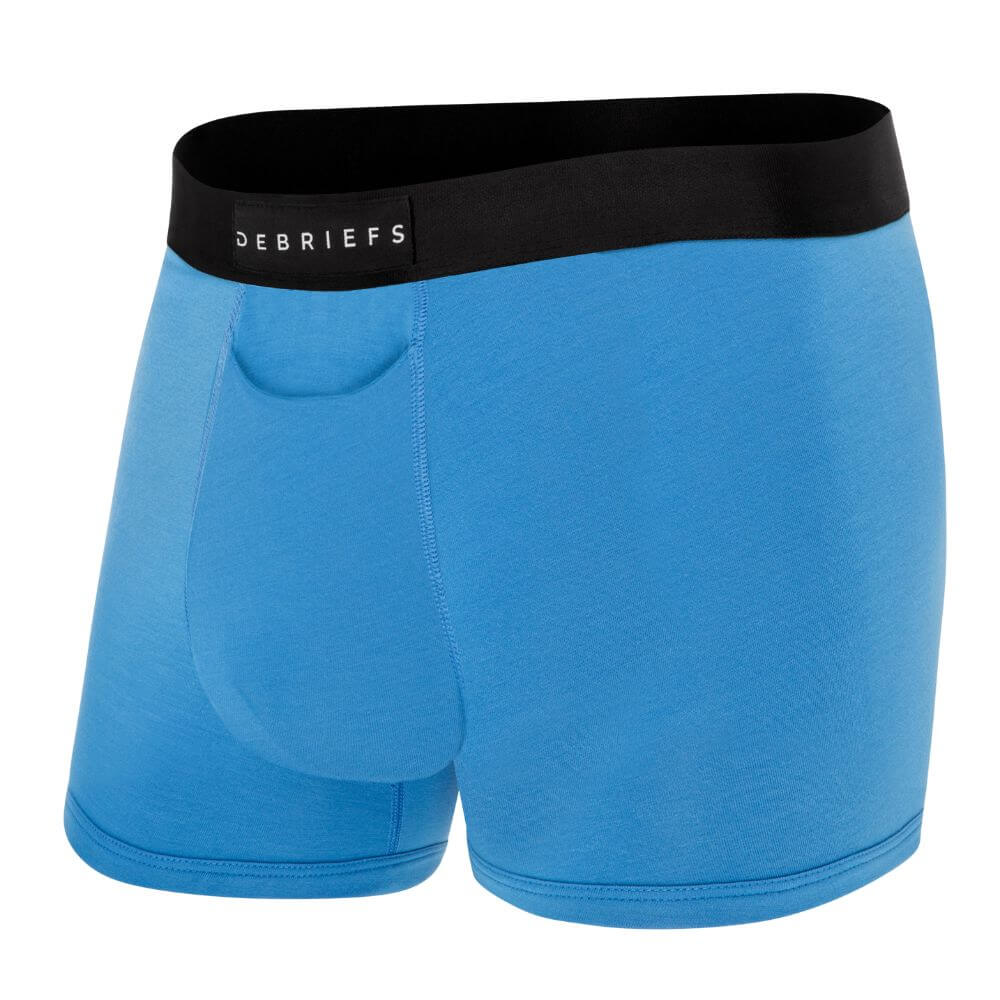
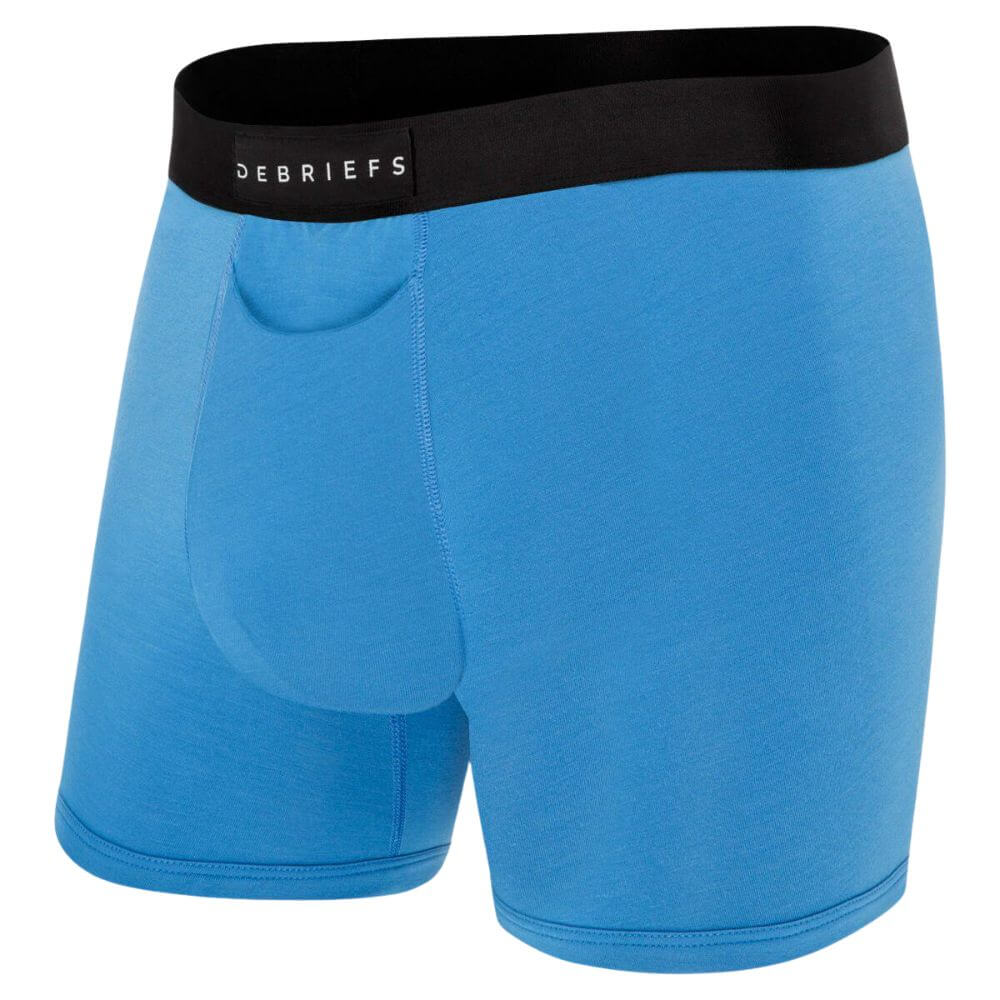
Trunks run about 5cm of inseam. They sit cleanly under fitted clothing, suit slimmer thighs, and are the better choice for desk-heavy days. Boxer briefs run to roughly 9cm. That extra length puts fabric between the thighs where skin-on-skin friction would otherwise occur. On a sedentary day, the difference barely registers. On a day with sustained walking or time on your feet, it's significant.

Most men have settled into a cut based on what they were buying years ago, without knowing whether it was right for their build. The only way to find out is to wear both, in a fabric that handles moisture, for at least a week each. The comparison of breathable everyday fabrics covers the material side in more detail if you want to go deeper before deciding.
What Good Actually Feels Like
The strongest praise underwear gets is almost entirely negative.
"I don't even know I'm wearing them." "No chafing." "Doesn't bunch." "Stays put." Our shortest and most memorable customer review is seven words: "Good lord these are comfortable. That's it. That's the review." Not a list of technical attributes. Just a statement that the problem stopped.
The men at three and four years on the same pairs don't write reviews. There's nothing to say. The thing is working and there's nothing to report. "4+ years and the elastic is still as new" is about as enthusiastic as it gets from someone who's been wearing the same pair long enough to actually know.
That's the right expectation to set. Not a garment that adds something to the day. One that removes what was being subtracted from it.
The first time you wear something that genuinely disappears from awareness, the contrast with what you'd been tolerating is surprising. Not a revelation. Just the realisation that all those small adjustments and friction checks and damp moments were optional. You'd been paying a daily tax for years. You never noticed because each individual payment was small enough to absorb.
Underwear and the Morning Routine
It takes four seconds. The consequences run for sixteen hours.
Most men treat it as the least important decision of the morning, and that's rational. Underwear deserves almost no attention at the point of choosing. But it needs to earn that inattention by doing nothing for the rest of the day. The pairs that don't earn it keep billing you throughout, in small increments, for as long as you keep reaching for them.
And most men do keep reaching for them. Not because the underwear is good. Because the bar for change is just high enough that the daily irritation never clears it.
One pair is the whole experiment. Wear it for a week. See whether you notice it. If you don't, the drawer is sorted. If you do, the cut may not be right for your build, and there's more to figure out.
But at some point you stop defaulting to "that's just how underwear is." Because it isn't. That's just how your current ones are.
Frequently Asked
- Does underwear actually affect how your day goes?
- Yes. Not through any mystical mechanism. Physical discomfort is a recurring attention draw. Ride-up, friction, moisture, and constant readjusting all take up space in the background. Remove them and you get those hours back.
- Why does my underwear ride up?
- Usually an inseam length problem. When the inseam is too short for your thighs, the leg band sits in the friction zone and moves with every step. A longer inseam changes the geometry so the band stays below where the movement is happening. Degraded elastane is the second cause. If the hem can't hold tension through a full day's movement, it drifts.
- What fabric is best for everyday underwear?
- One that manages moisture, stays soft after repeated washing, and doesn't pill. MicroModal handles all three. Cotton absorbs moisture and holds it against the skin, which is the direct cause of most chafing and that end-of-day damp feeling.
- How do I know which cut to wear?
- If your thighs make contact when you walk, boxer briefs. The longer inseam puts fabric between the friction surfaces. If they don't, trunks sit cleaner under fitted clothing and work better for sedentary days. Having both and knowing when to reach for each is more useful than defaulting to one.
- Is expensive underwear worth it?
- The cost argument inverts over time. A well-made pair lasting three-plus years at regular use costs less per wear than a cheap pair replaced every few months. And the cheap pair has been mildly annoying you the whole time.
- What if I've always found underwear uncomfortable?
- Then you haven't worn the right cut in the right fabric. Persistent discomfort almost always comes from one of three things. 1) inseam length. 2) fabric that holds moisture against the skin. 3) seams with raised edges. All three are solvable. One pair, worn for a week, tells you more than any comparison chart.